Friday, 28 August 2015

The Hotel Pacifico


El Brujo
photo - Luis Gamero ©PromPeru

We have a good idea of what the Moche people looked like. The craftsmen of this culture that flourished on Peru's northern coast from the first century AD up until around 800 AD were highly skilled at reproducing facial features and expression. The distinctive decorated pottery style - dark red on a cream background - shows us scenes of everyday life such as hunting and fishing, and  Moche portrait vessels bring the people to life. 

El Brujo - the main religious centre of the Moche - is also decorated with motifs of a fearsome owl-spider spirit. Whilst elsewhere, at the Huaca del Sol and Huaca de la Luna, an alarming fanged deity, with the head of a marine bird and a nest of snakes for hair roams the walls alongside vibrant depictions of ritual combat, blood offerings and human sacrifice. 

You get the feeling you wouldn't want to cross the Moche.  Not then....... not now.


The Hotel Pacifico
In which this particular hotel proves to be anything but

Rafael Chachapoyas was a veteran driver of Peru’s northern highways, that’s why Tello always sought him out when we were that part of the country. The archaeologist had already suffered some nail biting experiences with chauffeurs who didn’t know how to negotiate the sandy dunes, but Rafael knew his way around. One day when we were travelling with him from Trujillo to Pacasmayo, Tello asked him to recommend a hotel in the port; somewhere clean but not too expensive.

He drew the car up outside the Hotel Pacifico.  A nice sounding name and it looked reasonable from the outside. We climbed the steps and went in to ask for four beds.

Saturday, 22 August 2015

A life in the day of a museum


Not sure if tio Hernan would approve, but my favourite installation at Peru's National Museum of Archaeology, Anthropology and History  was, and always will be, this fella.


In 2001 congress declared the Peruvian Hairless Dog to be a national treasure - and all museums and archaeological sites that were able to care for them were required to have one on site. On one of our visits to the museum in Pueblo Libre we found Farkis hanging out at the canteen (where else?). 

I think Hernan and Tello would have at least been pleased to see this ancient breed becoming more recognised on its home territory. 

Back in the early part of the twentieth century Tello fought long and hard to find a permanent home for a growing collection of significant finds; to create a place where both scholars and the public could have access to well preserved and documented artefacts. It wasn’t easy, but in 1945 he succeeded in establishing Peru's first state museum - today's MNAAH.

The first major task was to deal with the hundreds of fardos collected on the Paracas peninsula. Young Hernan found hands on conservation work far from glamorous. It was hard, dirty labour.  But the team was on a mission. Hernan’s stories capture the spirit that sustained them through the early starts, the lack of resources, and the backbreaking and meticulous efforts to unwrap and catalogue the mummy bundles.

Here are three of tio Hernan’s Anecdotes where we get a light hearted glimpse into daily goings on at the museum.


A bit of banter between mates
In which a lecherous truck driver has occasion for regret

Even though he was the director it was quite common for Tello to dress in overalls when he was working in the museum. Sometimes he could be studying thousands of pottery fragments for hours and hours. He watched over them all meticulously, guarding each one as if they were precious gold pieces. He employed the same dedication to the museum’s greasy, foul smelling human skulls and bones.

One warm day he was wearing his overalls, standing in the street at the service entrance to the museum, sucking on an ice lolly, when a truck load of plaster of Paris arrived. “Who’s going to take delivery of this plaster order?” shouted the truck driver as he got out, slamming the door.

Friday, 7 August 2015

Korcholis


In that first gloomy winter in Peru, tio Hernan’s Anecdotes gave me a taste of just how much more there was to see and discover, beyond the grey skies of Lima and the confines of mother in law’s sofa.  

The book provided a kind of cheat sheet layman’s introduction to the country’s archaeological sites and rich cultural heritage - so much more than the tourist poster Inca citadel at Machu Picchu.  

But more than that, the stories give a unique human insight into tio Hernan’s hero ‘el sabio’. They show us Tello the man, rather than Tello the father of Peruvian archaeology.  

It seems Tello had his favourite chifa (Chinese restaurant) and he was partial to a good lomo saltado*, an iconic Peruvian – Chinese fusion dish which millions of Peruvians still love to sit down to in homes and restaurants all over the country today.

Korcholis
In which Hernan speculates on the curious origins of a strange expression

‘Korcholis’ was el sabio Tello’s favorite word for whenever he was impressed by something. The word could have been one of his daughter Elenita’s creations. She had rather a splendid repertory of unique words that he called on from time to time.  But I have another theory. 

Monday, 3 August 2015

All in good humour

Falling in love is the easy part. But when two people from opposite ends of the globe join their lives together, there are inevitably times when the infamous ‘clash of cultures’ raises its ugly head. There’s no sugar coating it. Sometimes intercultural marriage gets you bent out of shape. In my humble opinion, best chance of success: focus on what unites rather than on what divides you.  Reach for the spaces in between.


It’s probably no great surprise then if I say that I’m not a great fan of nationalism. Sitting round numerous dinner tables on nearly all the world's continents, it sometimes feels like I’ve had to listen to just about every nationality declaim on just about every other nationality in any number of permutations.

What I like about Tello is that, although he undoubtedly had a strong nationalist vision, he worked happily with, and had great respect for his foreign counterparts. He was an Indian from the rural highlands who was at the same time an internationalist. In short he was comfortable with his place in the world. I think he had found his space in between.

That said, both Tello and tio Hernan were active participants in the indigenous movement which had begun to develop in Lima's intellectual circles in the opening decades of the twentieth century.

It’s worth bearing in mind that this is a time when congress still debated the ‘Indian problem’, with proposals such as the prohibition of reproduction by Indians and the importation of superior races from Western Europe seriously considered as viable solutions.*

Tello was one of the first social scientists to rigorously confront the idea that Peru’s indigenous cultures were inferior to those of the Spanish conquistadores.


All in good humour
In which our archaeologist indulges in a bit of good natured Hispanism vs Indigenism banter.


When the XXVII Congress of Americanists was held in Lima, Tello would recount to us each day on returning to the museum everything about the day’s happenings at the Congress. One day he couldn’t stop laughing. As the delegates were leaving they had seen a notice pinned up near the exit.  ‘Would the brachycephologist who mistakenly took a hat similar to his, please return said hat as soon as possible to the dolicocefalogist,’ signed Posnanski.

Friday, 17 July 2015

A matter of life and death


Paracas peninsula
photograph - Manuel Medir

©PromPeru 

In 1924 Julio C. Tello and the North American archaeologist Samuel Lothrop travelled to a secluded coastal peninsula a few hours south of Lima. There they found a landscape ravaged by looters. The ground was pitted with holes. Anything the tomb robbers had deemed to be of no value had been tossed aside. Human remains, pottery shards and scraps of textile lay strewn across the desert.

Tello and Lothrop carefully gathered up as much as they could salvage, piling it all into a truck bound for Lima. The return trip coincided with one of the heaviest rain deluges ever recorded in the area, turning the journey into a veritable adventure. The vehicle with its gruesome burden advanced slowly along roads which, at the best of times were rudimentary, but had now turned into a quagmire of sodden sand. This was to mark the beginning of one of the most important finds in Peruvian archaeology - the discovery of the Paracas culture.

A year later Tello was back, with his assistant Mejía Xesspe. Over the next four years excavations uncovered a series of bottle-shaped tombs, and a steep slope crowded with conical funerary bundles.  


fig 1


The discovery was extraordinary, eventually yielding up more than 400 funeral bundles - fardos. The textiles that wrapped the bundles were startling; finely woven and embroidered with complex designs representing geometric designs, humans and mythical animals. The colours were still brilliant, having been almost perfectly conserved in the desert environment.These textiles are now known as some of the finest ever produced in pre-Columbian societies.

The materials were all carefully logged before being packed in straw and jute sacks for transportation to Lima, where Tello, Hernan and the rest of the team began the immense and intricate task of opening and cataloging the bundles.

photo - MNAAHP

But there were scant resources to deal with this major find, and once the bundles had been removed from the dry desert environment that had kept them for so long, it was a battle against time. Tello was always fighting the system – struggling to get the funds and personnel he needed to effectively conserve and document the material.

In this story. Hernan describes how Tello had no qualms about going straight to the top to get a job done.  He’s not adverse to a little clever strategizing either, using his success at another site just outside Lima, Pachacámac, to lobby for funds.

Happily he was successful. This is just the beginning of the story, but the Paracas funeral bundles eventually became the flagship collection of what is today Peru’s National Museum of Archaeology, Anthropology and History.

On my most recent visit to Pachacámac the earth moved for me (literally) but that's another story. Hernan is writing over half a century ago and he flags up an issue here which is increasingly relevant today. Pachacámac survives relatively intact, but many of Lima’s lesser known huacas have fallen foul of urban spread. Fragile sites have been lost forever to blatantly uncontrolled construction.

And the question of access looms large over Peru’s most famous monument Machu Picchu. How long before visitor numbers begin to cause serious issues for the site’s survival and integrity?


A matter of life or death
In which Tello goes in to bat with the big boys for his beloved museum


The museum needed more room. Of course we would never get as much as Tello wanted, but for sure we needed more than the new government building project would provide.
fig 2

We had more than three hundred Paracas mummies stored at the museum; many of which were extensively wrapped, and their beautiful cloaks, along with everything else, were slowly deteriorating in Lima’s humid conditions.  It was essential that we unwrap and study them as soon as possible.

Friday, 10 July 2015

The governor of Huantán

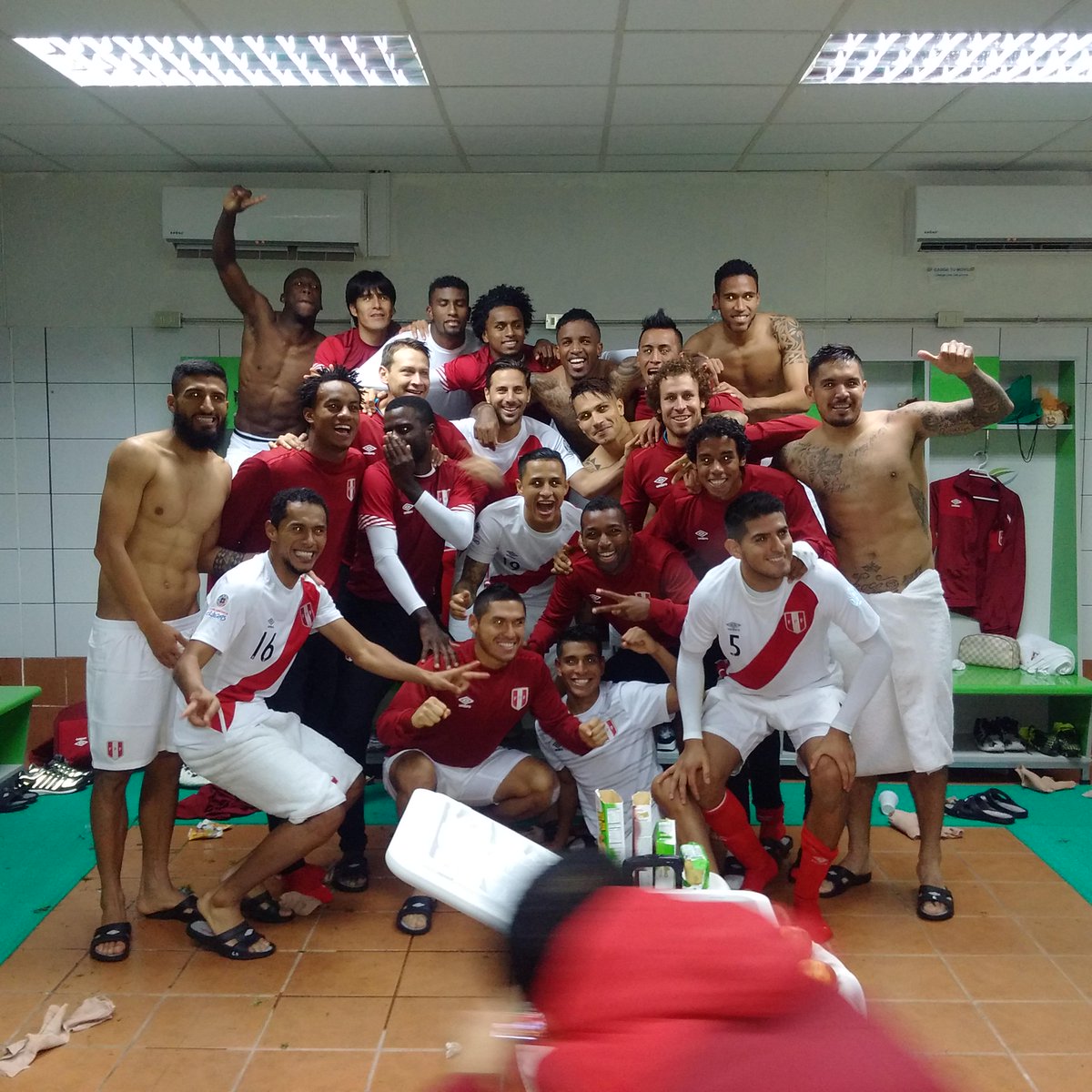
Great excitement and pride recently over Peru's impressive performance during the Copa America. 

And then an additional stirring moment when captain and Bayern Munich striker Claudio Pizarro became the first player in the tournament to tweet in Quechua.


Pizarro told El Comercio that he had to get help from the internet, his team mates and the team’s physio to post the messages. “I would have liked to have learned it in school, and have it. But it helps at least to get people excited and fired up. And at the same time we help keep it alive – not to lose this language that is ours.”

Quechua is one of Peru’s official languages, along with Spanish, and is still spoken by about 3.5 million people, mainly in the central and southern Andes. It’s only one of the country’s indigenous languages - there’s also Aymara from the southern plains of Puno and Lake Titicaca, and other lesser known languages from the Amazon region.

Although these languages are starting to be recognized more, they are struggling to survive as people move from the country to the larger cities and the coast where Spanish is dominant.

Tello’s knowledge of Quechua was a huge advantage in his work. It wasn’t only about uncovering artefacts. It was all about the people. There’s a strong sense of this in tio Hernan’s Anecdotes. For them the excitement was in the stories those treasures could tell about the past and how those stories resonate down the generations to form a living link in the indigenous populations.

Tello’s enthusiastic investigative approach was apparent from early on. Hernan describes the scientist’s first field trip as a young student


The governor of Huantán
In which three students excite considerable suspicion in Yauyos

The young Tello was twenty years old and in the second year of his studies when, under the guidance of his professor Sebastián Barranca, he organized his first anthropological field trip. He chose the province of Yauyos, so that he could study the cauqui language, along with the flora, fauna and folklore of the region.

Thursday, 2 July 2015

Banquet at the Maury

As I write today temperatures are moving on up into the 30s here in Lisbon. Time for one of my all-time favourite summer cocktails - Chilcano de Pisco.

Pour a good large measure of Pisco (about 50ml) over plenty of ice cubes in a tall glass, add a squeeze of lime juice (about a tablespoon), a splash of Angostura bitters, and top it all up with ginger ale. Have fun playing around with the measurements if you like, but I have it on good authority that it’s all in the order of ingredients in the glass.


photo - El Comercio

Pisco Sour is the better known classic Peruvian cocktail, and some years ago I went to the bar at the Hotel Maury to research the lineage of this most cherished lovechild of Peruvian culture. 

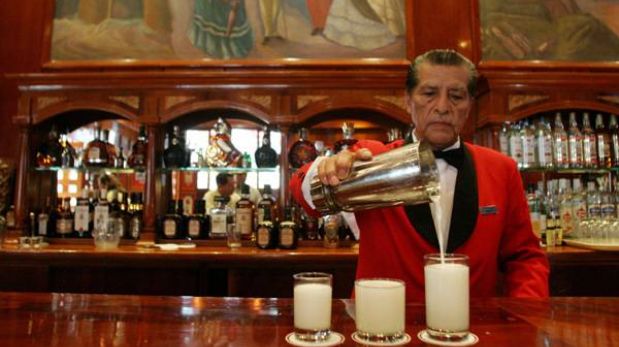
If I’m honest it was a chance to just hang out in this coolest of cool bars in the heart of downtown Lima on a dusty Sunday afternoon. But I was also lucky enough to watch a master at work. Señor Eloy Cuadros Cordoba has worked at the Hotel Maury for more than half a century. The full interview, complete with Señor Cuadros' tips for the perfect Pisco Sour, is here. 


Señor Eloy Cuadros Cordoba doing what he does best behind the bar at the Maury
photo - el Comercio
fig. 1
It’s a Californian import, Victor Morris, who is widely credited as having invented the original Pisco Sour. He worked in the mines of Cerro de Pasco where he ran a gaming house. The story goes that with no whisky to hand to make whisky sours, he replaced it with Pisco. He later opened the Morris Bar in Lima. But Morris was a consummate gambler. He went bankrupt, had to close the bar, and some of his employees then moved to the Hotel Maury.


The Posada de Pedro Maury existed since the days of independence. General San Martin himself stayed there, as well as Miguel Grau. Later the posada was refurbished and modernized and in 1848 became Lima's first great illustrious hotel - the Hotel Maury.

Today it is a rather prosaic 1954 version of the original. Needless to say it has lost much of its former grandeur, but the bar is still splendid and proclaims to be the birthplace of the Pisco Sour as we know it. 

As Cuadros, the resident, charismatic barman will testify, his clientele is now a mixed bunch of professionals and tourists, although the Maury still sees the odd diplomat or two popping in from the Ministry of Foreign Affairs just up the road.


photo - citiHeartBeat
I had also gone to the Maury because of this story that I found in the Anecdotes. 

Tio Hernan makes it clear that back in the day, the Maury had clout; home to a glittering array of politicians, business men, and the social elite. 


Peru’s devastating loss to Chile in the War of the Pacific (1884), and the country’s ensuing bankruptcy spawned a group of young intellectuals who questioned what had happened, what had gone wrong, and more importantly addressed the issue of what needed to happen now. How was Peru to emerge and develop and move forward?  They are known as la generación de los 900 (900 is short for 1900’s), and they were the emerging thinkers of the new twentieth century.

Victor Andrés Belaunde, Raul Porras Barrenechea, José de la Rivera Agüero, Francisco Garcia Calderón -the journalist, writer and diplomat who Hernan describes here returning to Peru after his postings abroad. These are all names that resonate in Peru still today.

They all gathered at the Maury and they were, as Hernan points out here, all white.


Banquet at the Maury
In which Tello appears on the radar of Lima's society elite

If all the anecdotes from the Hotel Maury could be compiled, we would have a fascinating record of the many subtle nuances of our nation's story. So many of the men, in so many diverse fields, who helped trace the route of our country's history have passed through those doors

On this occasion, none other than, the famous Peruvian philosopher and writer, Francisco Garcia Calderón had just arrived in Lima from Paris, and his friends wanted to organize a banquet in his honour. Naturally it would be in one of the city’s most luxurious and prestigious locales … the Maury.